
Classical Weimar (World Heritage Site)
UNESCO site of 11 Enlightenment-era sites in Weimar, Germany.
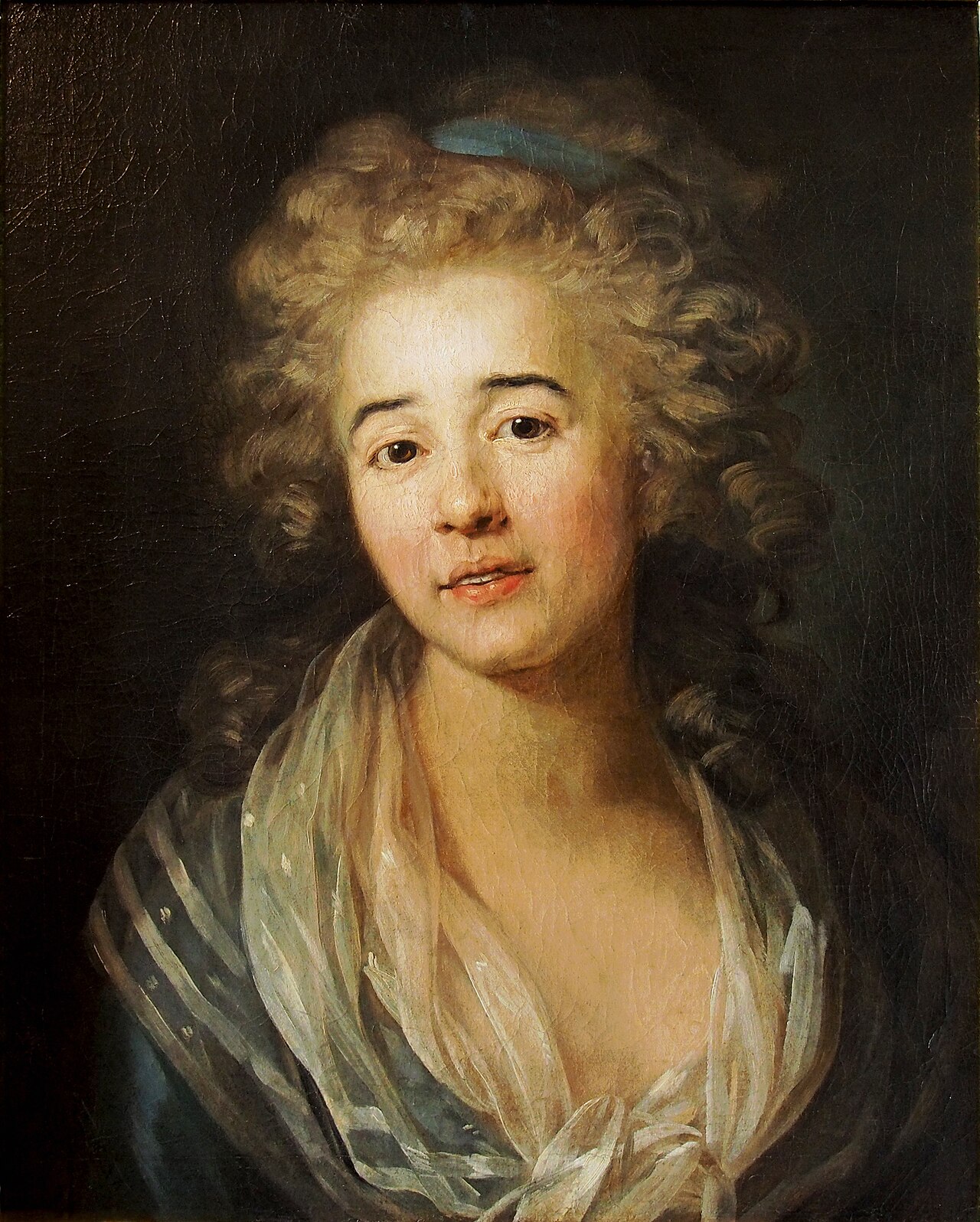
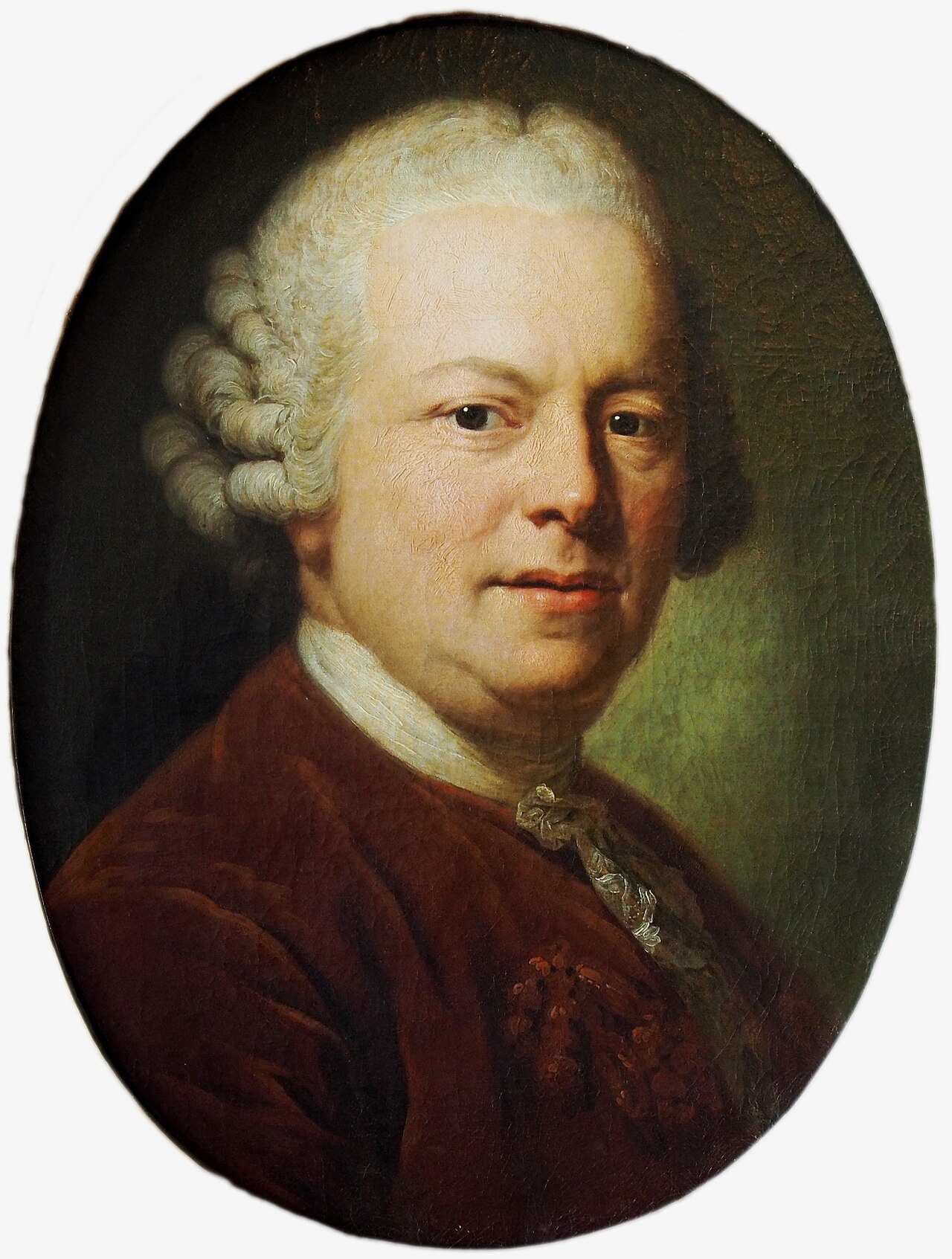
Classical Weimar (Klassisches Weimar in German) is a UNESCO World Heritage Site made up of eleven locations in and around the city of Weimar, Germany. It was added to the World Heritage list on 2 December 1998. These sites all show how Weimar became a key cultural hub of the Enlightenment in the eighteenth and early nineteenth centuries. Between 1772 and 1805, several major writers and philosophers—including Johann Wolfgang von Goethe, Johann Gottfried Herder, Friedrich Schiller, and Christoph Martin Wieland—lived in Weimar. They helped create and take part in the Weimar Classicism movement, and the city’s architecture reflects the rapid cultural growth of that era.
The component sites are: Goethe’s House (a Baroque home built 1707–1709, plus his Garden and Garden House in the Park an der Ilm); Schiller’s House (a Baroque house from 1777 that includes a sixteenth-century outbuilding); Herder Church (St Peter and Paul), Herder House, and the Old High School, all linked to philosopher and poet Johann Gottfried Herder (1774–1803); Schloss Weimar (Residence Castle) and the Bastille ensemble; the Dowager’s Palace (Wittumspalais), a group of two- and three-storey Baroque buildings; Duchess Anna Amalia Library; the Park on the Ilm with the Roman House; Schloss Belvedere and Orangery (a two-storey Baroque palace with a U-shaped orangery); Schloss Ettersburg and Park (a four-storey, three-wing structure with a courtyard); Schloss Tiefurt and Park (a stately home that was the summer residence of Duchess Anna Amalia of Brunswick-Wolfenbüttel, 1739–1807); and the Historical Cemetery in Weimar with the Princes’ Tomb.
- inscription_date
- 2 December 1998
- number_of_component_sites
- 11
- location
- Weimar, Germany
- associated_movement
- Weimar Classicism
- key_figures
- Johann Wolfgang von Goethe, Johann Gottfried Herder, Friedrich Schiller, Christoph Martin Wieland
- period_of_cultural_activity
- 1772–1805
Lore & Background
Classical Weimar comprises 11 sites in and around the city of Weimar, Germany. These properties bear testimony to Weimar's role as a cultural centre of the Enlightenment during the eighteenth and early nineteenth centuries. Between 1772 and 1805, notable writers and philosophers including Johann Wolfgang von Goethe, Johann Gottfried Herder, Friedrich Schiller, and Christoph Martin Wieland lived in Weimar, ushering in the Weimar Classicism movement.
Reader's Guide
The significance of Classical Weimar lies in its reflection of the rapid cultural development of the Classical Weimar era through the architecture of its component sites. These include Goethe's House, built in the Baroque style between 1707 and 1709, and his Garden and Garden House in Park an der Ilm; Schiller's House, a Baroque-styled house built in 1777 incorporating a sixteenth-century outbuilding; and the Herder Church, Herder House, and Old High School associated with Johann Gottfried Herder. Other sites are Schloss Weimar and the Bastille ensemble, the Dowager's Palace, Duchess Anna Amalia Library, Park on the Ilm with the Roman House, Schloss Belvedere and Orangery, Schloss Ettersburg and Park, Schloss Tiefurt and Park, and the Historical Cemetery with the Princes' Tomb. The site was inscribed on 2 December 1998.
Did You Know?
- Classical Weimar was inscribed as a UNESCO World Heritage Site on 2 December 1998.
- The site consists of 11 component sites in and around Weimar, Germany.
- Notable figures associated with the site include Johann Wolfgang von Goethe, Johann Gottfried Herder, Friedrich Schiller, and Christoph Martin Wieland.
- Goethe's House was built in the Baroque style between 1707 and 1709.
The Framework of Universal Recognition
UNESCO's World Heritage Convention, established in 1972, created a mechanism for recognizing places of outstanding universal value to humanity. Under this system, cultural heritage encompasses architectural works, monumental sculptures, inscriptions, groups of buildings, and archaeological sites. For a nation's historical places to become eligible for this distinction, that country must first be a signatory to the convention. The designation process is not automatic; it requires formal nomination by the signatory nation, followed by evaluation and selection during the annual sessions of the World Heritage Committee. This framework ensures that recognition is a collective international act rather than a unilateral national declaration, lending each inscription a weight that transcends borders. The convention's scope also extends to natural heritage—physical and biological formations, geological features, habitats of threatened species, and sites of scientific or aesthetic importance—though cultural properties like architectural ensembles form the majority of inscriptions across the decades of the list.
The Annual Ritual of Inscription
The World Heritage Committee convenes each year to deliberate on nominations, and the number of sites inscribed varies dramatically from one session to the next. The inaugural list in 1978, produced at the second session hosted by the United States, contained just twelve entries—eight cultural and four natural. By contrast, the 24th session in 2000, held in Australia, saw a record sixty-one sites added in a single sitting. At the other extreme, the 13th session in 1989 in France yielded only seven inscriptions. This variability reflects shifting priorities, the volume of nominations, and the committee's deliberative pace. Host nations have ranged widely: France alone presided over sessions in 1980, 1982, 1985, 1986, 1987, 1989, 2003, 2011, and 2025, while other countries such as Italy, Germany, China, and India have also taken turns. The rhythm of these gatherings has occasionally been disrupted by extraordinary circumstances, including the postponement of the 44th session due to the pandemic and the relocation of the 45th session from Kazan to Riyadh.
Germany at the Table
As a signatory to the 1972 World Heritage Convention, Germany participates in the nomination and protection of its own cultural and natural sites while also contributing to the broader international dialogue. The country has twice hosted the annual World Heritage Committee sessions: the 19th session in 1995, which inscribed twenty-nine sites (twenty-three cultural, six natural), and the 39th session in 2015, which added twenty-four entries (twenty-three cultural, one mixed). Hosting a session places a nation at the center of the deliberative process, requiring logistical preparation and diplomatic engagement with delegates from around the world. Germany's repeated involvement underscores its commitment to the convention's principles and its role in sustaining the institutional machinery that evaluates nominations year after year. The fact that cultural properties consistently outnumber natural ones in the inscriptions—visible in both German-hosted sessions—mirrors a pattern seen across the entire history of the list, where architectural works, groups of buildings, and monumental sites form the backbone of what humanity chooses to protect under this shared designation.
A Growing Canon of Human Achievement
The World Heritage List has expanded from a modest initial roster to a vast catalogue of human and natural achievement. The first entry, the Galápagos Islands, set a precedent that would be followed by thousands of subsequent inscriptions. Over the decades, the annual sessions have added sites at an accelerating pace: from twelve in 1978 to forty-five in 1979, then fluctuating between roughly twenty and fifty in most subsequent years. The 2000 session in Australia represented a peak with sixty-one new entries, while the 2002 session in Hungary added only nine. Cultural properties have consistently dominated the list, with the vast majority of inscriptions each year falling into that category, while natural and mixed sites form a smaller but significant portion. The list also includes a parallel register of World Heritage in Danger, and in January 2023 an extraordinary session added three cultural sites under an emergency procedure to both the main list and the danger list simultaneously. This dual mechanism reflects the convention's ambition not merely to celebrate but to safeguard heritage under threat.
Gallery
Frequently Asked Questions
What exactly is Classical Weimar?
It is a UNESCO World Heritage designation that groups together eleven separate locations in and around the city of Weimar, Germany. Together they illustrate how the city became a leading center of Enlightenment-era thought in the late 1700s and early 1800s.
When was Classical Weimar inscribed on the World Heritage List?
UNESCO officially added the Classical Weimar listing to its World Heritage register on 2 December 1998.
Which literary and philosophical figures are most closely associated with Classical Weimar?
The site is tied to Goethe, Herder, Schiller, and Wieland, all of whom lived and worked in Weimar during the period from 1772 to 1805. Their collaborative and individual output gave rise to the cultural movement known as Weimar Classicism.
How many component locations make up the Classical Weimar World Heritage Site?
The listing comprises eleven distinct sites spread across Weimar and its immediate surroundings.
Why is Classical Weimar considered significant in world cultural history?
It preserves the physical traces of a remarkable concentration of Enlightenment-era writers and thinkers in one small German city over roughly three decades. That gathering produced a lasting artistic and intellectual legacy that shaped European literature and philosophy well into the nineteenth century.
More in World Heritage Sites in Germany 1-24
Spotted an error? Know more?
This is a living reference — every entry is fact-audited, and reader corrections feed straight into our audit queue. Suggest an edit · See this site's audit record